

Our team of dedicated volunteers have been working hard to protect and restore our woodland bluebells across the farm and surrounding hill, helping to safeguard one of Britain’s most iconic spring plants.
Why these bluebells matter
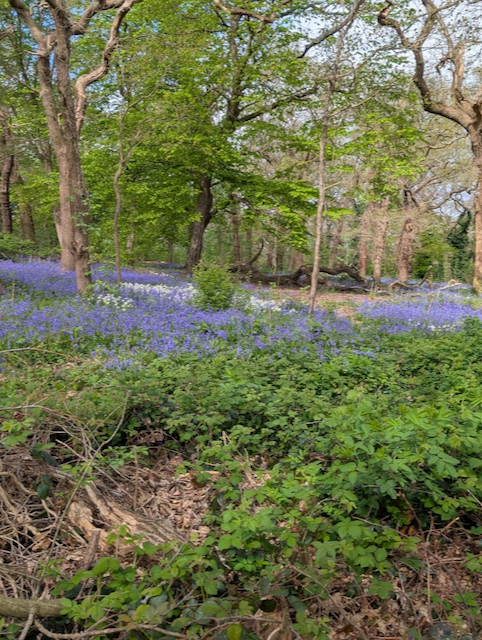
These characteristic woodland bluebells are far more than a beautiful seasonal display:
- They are an indicator species, signalling ancient woodland that has developed over hundreds of years.
- They have developed alongside local insect species, providing a vital early-season nectar source for pollinators.
- Their presence supports a rich and balanced woodland ecosystem, contributing to overall biodiversity.
What we’ve been doing
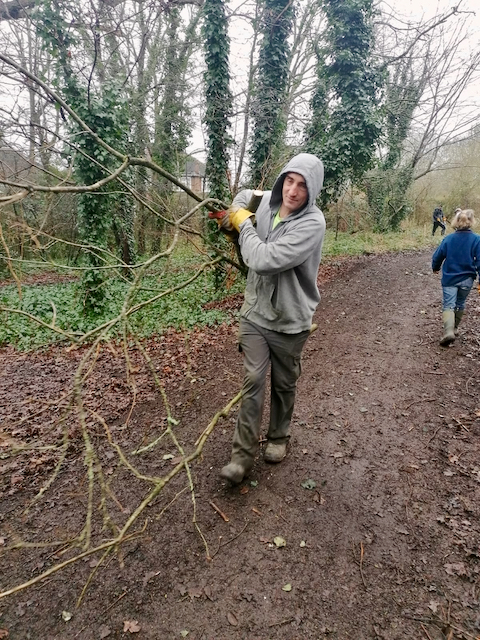
Working closely with Jon Staples, the Horsenden Ranger, volunteers have been:
- Carefully thinning trees to allow more light to reach the woodland floor.
- Creating dead hedges to protect sensitive bluebell patches.
- Expanding and strengthening bluebell areas within the ancient woods.


Removal of Spanish bluebells
As part of these efforts, we are also removing Spanish bluebells from parts of the site. Although similar in appearance, this species cross-breeds with our native woodland bluebells, gradually changing their characteristics. They can also spread more aggressively and outcompete other woodland plants. This management work is essential to ensure our special bluebells continue to thrive long into the future.
For more on how to tell the difference between the two types of bluebell, visit:
https://www.wildlifetrusts.org/wildlife/how-identify/spanish-or-native-bluebell


How you can help
- Please do not dispose of garden waste in woodland areas. This is a key pathway for non-native plants like Spanish bluebells to spread into conservation areas.
- Please respect the dead hedge boundaries around the site and take photos from a distance. Stepping on bluebells can damage them, killing plants or preventing them from growing and spreading. By admiring them from afar, you help give them the best chance to thrive and expand.
By working together, we can protect our amazing woodlands and ensure that future generations can enjoy the beauty—and ecological importance—of the stunning spring bluebell displays.
Thank you for your support.
Leave a Reply